
The new provision under the Income-Tax Act may enable the authorities to seize trustees' personal assets if there's a breach of objectives governing registered charitable trusts.

Measures that quickly boost demand and increase employment are needed to push up growth. Moreover, without announcing new planss, the government should strengthen schemes such as PM KISAN, MNREGA and programmes to build rural roads.

The states that witnessed high CPI-based inflation rates were Lakshadweep, Tripura, Odisha, Uttar Pradesh, Kerala, Madhya Pradesh, Puducherry, Tamil Nadu, Rajasthan, Manipur and Mizoram.

The queries, sent in November, were mainly about Capital Investment Trust, which the I-T department said, was used for the purpose of transferring foreign funds comprising global depository receipts (GDRs) of the value of $400 million to two Indian entities - Reliance Utilities & Power (RUPL) and Reliance Port & Terminal (RPTL), owned by the Ambani family. A show-cause notice issued on March 29 to Ambani's wife Nita, and their three children.
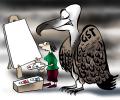
E-invoicing would be implemented on a voluntary basis by those having an annual turnover of above Rs 500 crore from January 1.
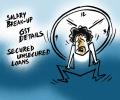
There are about 31,000 pending cases, locking revenue worth Rs 500 crore.

In 2009, FinMin proposed to move regulators' reserves into public account. These accounts were finally opened in 2013-14. However, no funds have been deposited in it so far.

Karvy group's commodity broking arm, too, is facing a liquidity crisis because of some issues related to NCDEX, said people in the know.

To propel demand, one should concentrate on indirect taxes and bring down the goods and services tax (GST) rates to a uniform 12 per cent as the Vijay Kelkar panel had recommended, said Ajit Ranade, chief economist at Aditya Birla Group.

The new restriction will be challenging for businesses, as they will have to do regular follow-ups with their suppliers.

In the aftermath of the Karvy incident, lending against third-party collateral facility raises questions over regulations concerning banks and brokers which are at loggerheads. While Sebi and NSDL have ordered the transfer of securities, which were kept as collateral, lenders followed the old business model of sanctioning loan against shares and allegedly overlooked certain parameters. Legal experts feel that this could lead to a collapse of the loan-against-shares market as it raises questions over the sanctity of the pledged securities.

'The corporate tax cuts will obviously result in lower tax payments by companies,' says Central Board of Direct Taxes member Akhilesh Ranjan who retires after 37 years in government service.

BMA's clients allege that depository firm CDSL and stock exchanges did not act on their complaints, prompting them to protest before Sebi. They say their shares have been transferred to a pool account without their knowledge and have been used to avail loans. Clients alleged that BMA has pledged their securities with a leading private bank, who could have sold their holdings.
What's required is proper implementation of the rules and better coordination between market intermediaries such as stock exchanges and clearing members who play a key role in monitoring brokerages.

The contentious issue that Tata Trusts is challenging is the date of the order, which makes it liable to pay a much higher amount of tax under the new tax provision introduced in June 2016 concerning charitable trusts.

This was a fresh probe based on the inspection of certain derivative contracts both on the BSE and NSE.

Kochhar was directed to return about Rs 10 crore in cash bonuses she had received as CEO, and also give up close to 6 million shares of the bank she had as stock option, which was about Rs 350 crore.

This is because no prosecution complaint has been filed in any of these cases under the Black Money Act.

In his first two years, Tyagi, a Himachal Pradesh cadre IAS officer, has implemented challenging stock market reforms and taken action against high-profile corporate entities.

The department apparently suspects the use of shell firms or front entities in some aspects of such remittance. Money might, it suspects, have moved in some cases from tax-free jurisdictions or tax havens to accounts in the UAE and some South Asian countries.
 © 2026 Rediff.com - Investor Information - Advertise with us - Disclaimer - Privacy Policy - Sitemap - Feedback - About us - Terms of use - Grievances